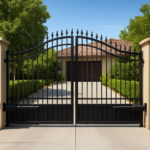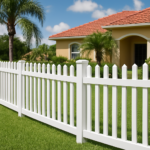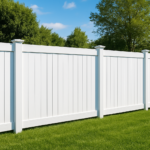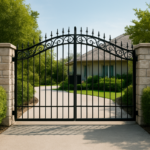

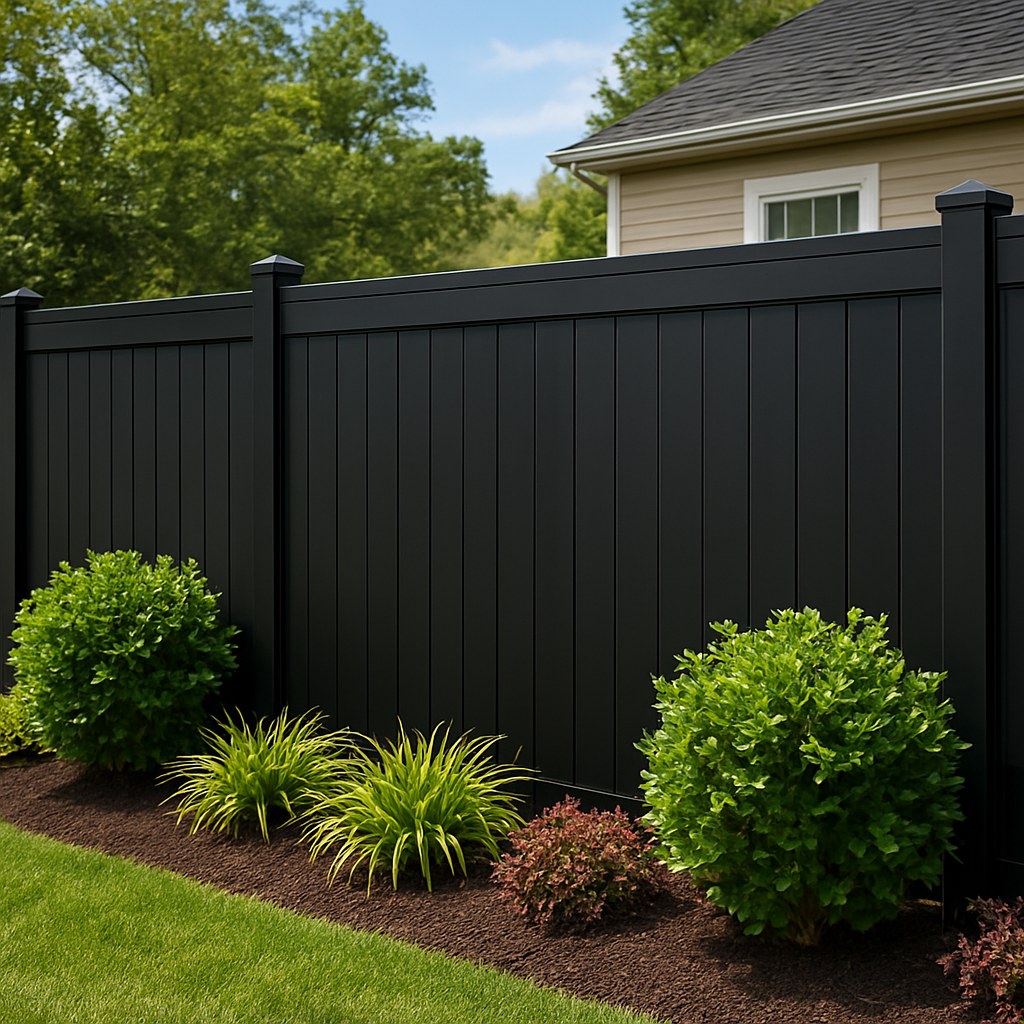
Planning a black vinyl fence in Tampa Bay means balancing style, heat and UV exposure, and hurricane-level wind loads. This guide walks through practical design routes—from privacy panels to modern horizontal slats—what to demand in materials and UV protection, and the installation practices that satisfy Florida wind-load and permitting rules. Use the checklists and local tips to compare products, avoid common installation mistakes, and prepare for an informed site visit with Vilo Fence.
Design routes for black vinyl fences and where each works best
Start with function, not looks. A black vinyl fence can be decorative, private, or simply a boundary; pick the route that matches what you need first, then tune the profile, finish, and reinforcement to the site.
Common design routes and where to use them
- Full privacy panels: Best for backyard privacy and pool enclosures where sight lines and wind control matter. Tradeoff – heavier visual mass and greater thermal expansion, so specify reinforced posts and allow clip gaps for movement.
- Classic picket and decorative styles: Use in front yards and gardens for curb appeal and plant framing. Tradeoff – less privacy and lower wind resistance than reinforced panels, but lower cost and easier gates.
- Horizontal slat and contemporary privacy: Ideal for modern homes or screening mechanical equipment. Tradeoff – narrow slats amplify heat absorption and need precise spacing to avoid sag; choose low-gloss finishes to reduce glare.
- Ranch rail and open perimeter: Works for large residential lots, equestrian properties, and commercial boundaries where visibility is desired. Tradeoff – minimal privacy but lower material and reinforcement needs.
- Mixed-materials installations: Combine black vinyl with masonry pillars, wood accents, or metal posts to break up mass and add strength at gates. Tradeoff – higher cost and more complex detailing at the interfaces, but better long-term durability and visual balance.
- Decorative pool-grade fencing: Use code-compliant black vinyl picket or lattice with self-closing gates and corrosion resistant hardware for safety without a steel appearance.
Practical insight: Matte or low-sheen finishes make black vinyl read softer in small yards and reduce glare off panels, but they can show surface dirt more readily than semi-gloss. For coastal sites, prioritize UV-stabilized, co-extruded panels and stainless or hot-dip galvanized fasteners.
Concrete example: A Tampa Bay homeowner replaced an aging wood fence behind a compact courtyard with 6-foot black vinyl privacy panels and masonry piers at every fourth post. The result preserved privacy, reduced maintenance, and the piers anchored heavy gate hardware so the gate remained true through hurricane season.
Choose the design that solves the primary problem – privacy, visibility, or durability – then select profiles and reinforcement to match wind and heat loads.
Material and manufacturing details that affect durability
Not all black vinyl fence products age the same. The difference comes down to three manufacturing decisions: the pigment and UV package, whether the profile is co-extruded or single-layer, and if structural reinforcement is factory-ready or an afterthought.
UV protection, color chemistry, and why co-extrusion matters
UV-stabilized color wins in high-sun climates. For black vinyl fencing you want panels with a UV-rich cap layer or a co-extruded skin that contains UV inhibitors and weathering stabilizers. That cap protects the colored surface; without it the pigment and binder in the core will degrade faster, producing visible chalking and loss of sheen.
Pigment choice and long-term colorfastness. Manufacturers use carbon black and other pigments differently. High-quality formulations lock pigment into the cap and include light stabilizers. Ask for technical data sheets and fade testing results or see manufacturer specs on CertainTeed fencing and industry guidance at the Vinyl Institute.
Structure: wall thickness, inserts, and thermal movement
Thermal expansion is real and larger with dark colors. Black vinyl absorbs more heat, raising surface temperature and increasing linear expansion. The practical consequence is movement at clip points and gates; specify expansion gaps, flexible clips, and sliding connectors rather than rigid fasteners for long runs and long gates.
Reinforcement is not optional in wind zones. For Tampa Bay use profiles designed to accept galvanized steel or aluminum inserts in rails and posts. In coastal sites prefer hot-dip galvanized or 316 stainless inserts and fasteners to avoid corrosion-related failures. Reinforced rails mean fewer sag issues and panels that meet wind-load requirements.
- Ask for technical specs: wall thickness (in mm or in), co-extrusion description, and accelerated UV/fade test results.
- Demand reinforcement options: specify steel or aluminum inserts for posts and rails, and request corrosion rating for any metal.
- Clarify warranty scope: color fade versus structural failure, and whether color fade allowances are pro-rated.
Tradeoff to accept: recycled-content formulations reduce cost and footprint but can lower UV resistance and impact strength unless the manufacturer compensates with a thicker UV cap. If you prioritize long-term color and mechanical stability in Tampa, pay for co-extruded, thicker-walled profiles with tested UV packages.
Concrete example: A commercial property replacement used economy black PVC panels with no engineered inserts and began showing panel bowing and loose gate hardware after two years. The follow-up installation used co-extruded panels with galvanized inserts, stainless fasteners, and expansion-capable clips; after three hurricane seasons the line remained plumb and gates tracked correctly.
Insist on co-extrusion, manufacturer UV test data, and reinforcement options on your spec sheet. Verbal promises are not enough.
Tampa Bay climate and code considerations for black vinyl
Practical fact: Tampa Bay forces you to design for three simultaneous stresses — intense UV, salt-laden air, and high wind loads — and failing on any one of them shortens a black vinyl fence much faster than homeowners expect. Plan with all three in mind, not just the panel profile or color.
Properties within immediate coastal exposure need different hardware and metals than inland sites. Use 316 stainless steel for fasteners and brackets where salt spray hits panels directly; hot-dip galvanized hardware is acceptable farther inland but will corrode faster in salt air. Ask your installer to identify which side of that line your property sits on and specify fastener grade in the contract.
Permits, wind loads, and what actually matters
Code is a baseline, not a guarantee. The Florida Building Code gives wind-load tables and testing protocols, but site-specific conditions — long unbroken runs, exposed corners, or heavy vehicular gate openings — create failure points that minimum code sometimes under-addresses. Require a written wind calculation or engineered detail for any long run or gate, and make sure the installer will pull the local permit and list the wind-load design on it. See the Florida Building Commission for permitting basics: Florida Building Commission.
Black vinyl increases thermal surface temperature, so connections and gate assemblies must be detailed to allow movement. In practice this means specifying sliding clips or flexible brackets at panel ends, continuous steel reinforcement inside heavy rails, and reinforced post assemblies at gates. For wide gates insist on double-post piers or embedded reinforced concrete columns rather than relying on a single vinyl post capped with a sleeve.
Concrete example: A couple in Gulfport installed decorative black vinyl pickets with economy fasteners; after two seasons the latch posts showed rust streaks and a double gate began to sag. The corrective rework used 316 stainless fasteners, galvanized inserts inside rails, and concrete-reinforced piers at each gate post. The installer supplied wind-load calculations and a permit amendment; the gates have remained true through two tropical storms.
There is a cost tradeoff: specifying stainless hardware, deeper footings, and engineered reinforcements adds 10–30% to material and labor depending on gate complexity. That extra upfront cost buys fewer call-backs and preserves manufacturer warranties. My judgment from local projects: spend on reinforcement and corrosion-resistant hardware where failure would create safety or liability risk — gates, pool barriers, and perimeter runs facing open water.
Demand written wind calculations, specify corrosion-grade hardware for your exposure, and require the installer to pull permits — verbal assurances are not sufficient.
Maintenance checklist and realistic lifespan expectations
Start with a schedule, not hope. For a black vinyl fence in Tampa Bay plan on at minimum two maintenance touchpoints per year and quarterly attention for properties within coastal spray zones.
Seasonal maintenance checklist
- Quarterly rinse and inspection: Rinse with a garden hose or low-pressure washer (keep PSI under 1200, 40 degree nozzle, keep nozzle at least 3 feet away). Look for chalking, loose clips, and any brown rust streaks from hardware.
- Annual deep clean: Mild detergent scrub for dirt, 1:3 bleach to water for mildew stains, rinse thoroughly; avoid letting bleach contact landscape beds or metal inserts.
- Hardware service: Lubricate hinges and latches, tighten fasteners, and replace any corroded screws with 316 stainless or hot-dip galvanized where appropriate.
- Post and footing check after storms: Inspect for concrete cracks, leaning posts, or uplift; measure any movement and photograph for warranty claims.
- Panel and gate alignment: Verify gap clearances and clip positions for thermal movement; adjust or replace bent clips and re-seat reinforcement if rails show sag.
Practical tradeoff: Black panels show dirt and chalk more visibly than lighter colors, so they look neglected faster if you skip cleaning. The choice is simple – either accept a quarterly wipe-and-rinse routine or budget for professional cleaning every 1 to 3 years to preserve the look.
Repair versus replace judgment: Small surface scuffs and organic staining are almost always repairable on-site. Deep warping, repeated joint separation, or cracking at the post base indicate a structural problem – repair becomes a bandage and panel replacement or reinforced post work is the right move.
Concrete example: A homeowner in St. Petersburg followed a seasonal program – quarterly rinses, one annual bleach scrub, and stainless replacement of two latch screws each spring. After eight years the fence remained straight and color loss was modest; the only replacements were two panel clips and one gate post tie-in after a minor storm.
Realistic lifespan expectations: With co-extruded panels, proper reinforcement, and the maintenance above expect structural life of roughly 20 to 30 years in Tampa Bay conditions. Expect the visible finish to start showing noticeable fade or chalk in 7 to 12 years depending on UV package and exposure. Manufacturer warranties for structure often run 20 to 30 years while color warranties are commonly shorter and pro-rated – read exclusions for coastal exposure and cleaning requirements.
Warranty caveat and best practice: Warranties are conditional. Using underspecified fasteners, aggressive pressure washing, or leaving rusting hardware unaddressed are common ways owners void color or performance claims. Keep photos, maintenance logs, and the installer name on file to support any future claim; ask for warranty language in writing and for recommended cleaning methods from the manufacturer.
If you want the longest service life from a black vinyl fence in coastal Florida, pay for corrosion-resistant hardware and a documented maintenance plan up front – those choices matter more than the nominal difference between vinyl brands.
Practical installation tips and avoidable mistakes
Hard rule: installation choices—not just the panel profile—determine whether a black vinyl fence lasts or becomes an expensive repair. Get the foundations, fasteners, and movement allowances right before you touch a panel.
Step-by-step priorities on site
- Survey and drainage first: confirm finished grades, surface runoff, and whether any panels will sit over a swale. Sitting panels in pooled water or against constantly damp soil accelerates staining and undermines concrete footings.
- Locate utilities and secure permits: order utility marking (811) and have the installer pull required local permits and wind-load documents. Request a written wind calculation tied to your lot or exposure from the contractor; a generic statement is not sufficient.
- Specify embedment and footing type: for most Tampa Bay residential runs set posts into engineered concrete footings or helical piles depending on soil. For exposed runs, require reinforced piers at gates and corners rather than relying on a single sleeve-post.
- Plan for thermal movement: allow roughly 1/4 to 3/8 inch per 10 feet of linear run for expansion and contraction, and use sliding or flexible clips rather than rigid fasteners that transfer stress to panels.
- Reinforce where it matters: use galvanized or stainless inserts in rails and posts where wind loads or gate weights concentrate forces. Heavy decorative gates need double-post piers cast in concrete with through-bolted hardware.
- Choose installation method for slope: prefer rake (angled) panels for gentle, consistent slopes and stepped panels for short, terraced runs. On steep grades, budget for custom-cut bottom rails to avoid big gaps and reduced privacy.
Practical insight: the majority of field failures I see trace back to two mistakes—undersized footings and over-constraining panels. Cheap installers often skimp on embedment depth or use rigid clips to speed work; both increase warranty calls after the first hot summer or storm.
Common installer shortcuts to avoid: burying panels into soil to hide the bottom gap, substituting regular screws for 316 stainless or hot-dip galvanized fasteners in coastal exposures, and skipping engineered details for long continuous runs. Those shortcuts save a day but cost years of service life.
Concrete example: a homeowner tried to save by using economy posts and rigid clips on a 50-foot black vinyl privacy run facing open water. After seasonal heat the fence bowed and clips tore out at two locations. The corrective scope used deeper concrete piers, galvanized inserts, and sliding clips; the line has been stable through two tropical events.
Do not accept a bid without these three written items: post embedment depth, fastener grade for your exposure, and the installer’s wind-load calculation.
Final judgment: cheap materials or skipped details are the false economy. Pay for correct footings, corrosion-resistant hardware, and movement-capable attachments. Those three choices prevent most post-installation failures and preserve both appearance and warranty in Tampa Bay conditions. For wind-load specifics see Florida Building Commission guidance and bring those requirements into the contract.
Costs, value comparison, and how to choose the right product
Start with use, not price. A black vinyl fence chosen to deliver privacy, curb appeal, or gate security will require different materials and details — and those differences drive cost far more than color alone.
How to read a bid and compare real value
Most bids look comparable until you inspect three hidden line items: reinforcement (steel or aluminum inserts), footing size and method, and the specific grade of fasteners. Ask for these three line items separately so you can compare apples to apples. If one quote omits reinforcement costs or bundles permits ambiguously, it is almost always the lower-quality option.
- Step 1 — Align to function: pick the profile that solves your primary need (privacy, decorative, gate load) before worrying about style options such as lattice or picket.
- Step 2 — Demand unit pricing: cost per linear foot, cost per gate, and cost per reinforced post. Watch for vague phrases like
standard hardwareoras needed. - Step 3 — Compare lifecycle costs: add reasonable maintenance and likely replacement intervals to the initial price to get true cost of ownership over 10–20 years.
Typical installed ranges (Tampa context). For a residential black vinyl privacy fence expect roughly $35 to $75 per linear foot installed depending on wall thickness, co-extrusion, and required reinforcement. Adding heavy gates, stainless hardware, or engineered piers moves effective costs higher; budget another $500 to $3,000 per gate assembly depending on size and reinforcement.
Tradeoff to accept: cheaper panels save money up front but usually require stronger reinforcement or more frequent repairs in Tampa Bay. Spending 10–25% more on thicker, co-extruded profiles and proper inserts typically reduces maintenance and warranty claims — that premium pays off if your property fronts open water or sees high wind exposure.
How vinyl stacks up against alternatives. Compared with wood, black vinyl has higher initial material cost than budget wood but lower maintenance and no painting; over 15 years vinyl often wins on total cost. Aluminum is lighter and cooler in sun but lacks the same privacy mass; if privacy and a contemporary black look are top priorities, vinyl is usually the better tradeoff. Composite can match durability but is pricier and may not offer the same weather-tested black finishes manufacturers provide for PVC.
Concrete example: Two neighbors asked for 6-foot black vinyl privacy quotes for similar yards. Quote A listed $40/ft but used thin-walled panels, no specified inserts, and hot-dip galvanized screws. Quote B was $58/ft with co-extruded panels, galvanized inserts for every rail, 316 stainless at the water-facing side, and an itemized permit fee. After the first season the cheaper line needed hinge repairs and two replaced clips; the higher-cost install remained plumb and required only routine cleaning.
What to require in writing before you sign. Insist on an itemized estimate that lists material unit costs, reinforcement locations and type, footing dimensions, fastener grade for your exposure, gate details, permit responsibility, and both manufacturer and installer warranty terms. A clear change-order policy reduces disputes later.
If your top priorities are privacy and low maintenance in a coastal or high-wind lot, prioritize co-extruded panels, specified reinforcement, and corrosion-resistant hardware over the lowest bid.
Local examples and working with Vilo Fence
On Tampa Bay jobs the choices you make during estimation show up in year two. Local soil, salt spray, and recurring storms force tradeoffs you do not notice on a single-site quote: pay for stronger anchors now or pay for corrective work later. Vilo Fence approaches every site with a tolerance mindset — identify where loads concentrate and design the attachment points accordingly.
How Vilo Fence shows proof on local installs
What we bring to a site visit. Expect a short field assay: measure, probe soil where posts will go, note exposure to wind and salt, and lay out gate swing and access. Vilo Fence will bring physical samples of matte and semi-gloss black panels, demonstrate a reinforced post section, and show manufacturer spec sheets on co-extrusion and UV testing. The deliverable is an itemized proposal with alternate reinforcement and gate options — not a single-price flyer.
- Site deliverable: itemized scope, footing depths, reinforcement type, and timeline.
- Decision points: choose finish (matte vs semi-gloss), insert alloy (galvanized vs 316 stainless), and gate pier strategy (single post sleeve vs concrete pier).
- Documentation: manufacturer datasheets and a proposed permit path for your jurisdiction.
Concrete example: A Clearwater restaurant wanted a low-profile black vinyl perimeter that also kept delivery trucks clear of the sidewalk. Vilo Fence proposed a 4-foot decorative picket with aluminum inserts and concrete piers at vehicular gates. The job passed building inspection, sustained minimal salt staining after three years, and required only routine hinge lubrication — the client avoided a mid-season rework other nearby properties faced.
Practical tradeoff to weigh: masonry piers and 316 fasteners add cost but reduce callbacks and preserve warranty coverage in coastal exposures. If your property sits well inland you can choose less-expensive hardware and save up front, but you must accept shorter windows for visible finish integrity.
- Questions to ask installers: Which specific insert size and alloy will you use? Can you show recent local projects with comparable exposure? How will you accommodate thermal movement at long runs and gates?
- What to get in writing: explicit footing depth, fastener grade for each elevation, and an installation schedule tied to permit milestones.
Local references beat glossy brochures. Ask to walk or view at least two completed jobs in Tampa Bay with similar exposure before you sign.