
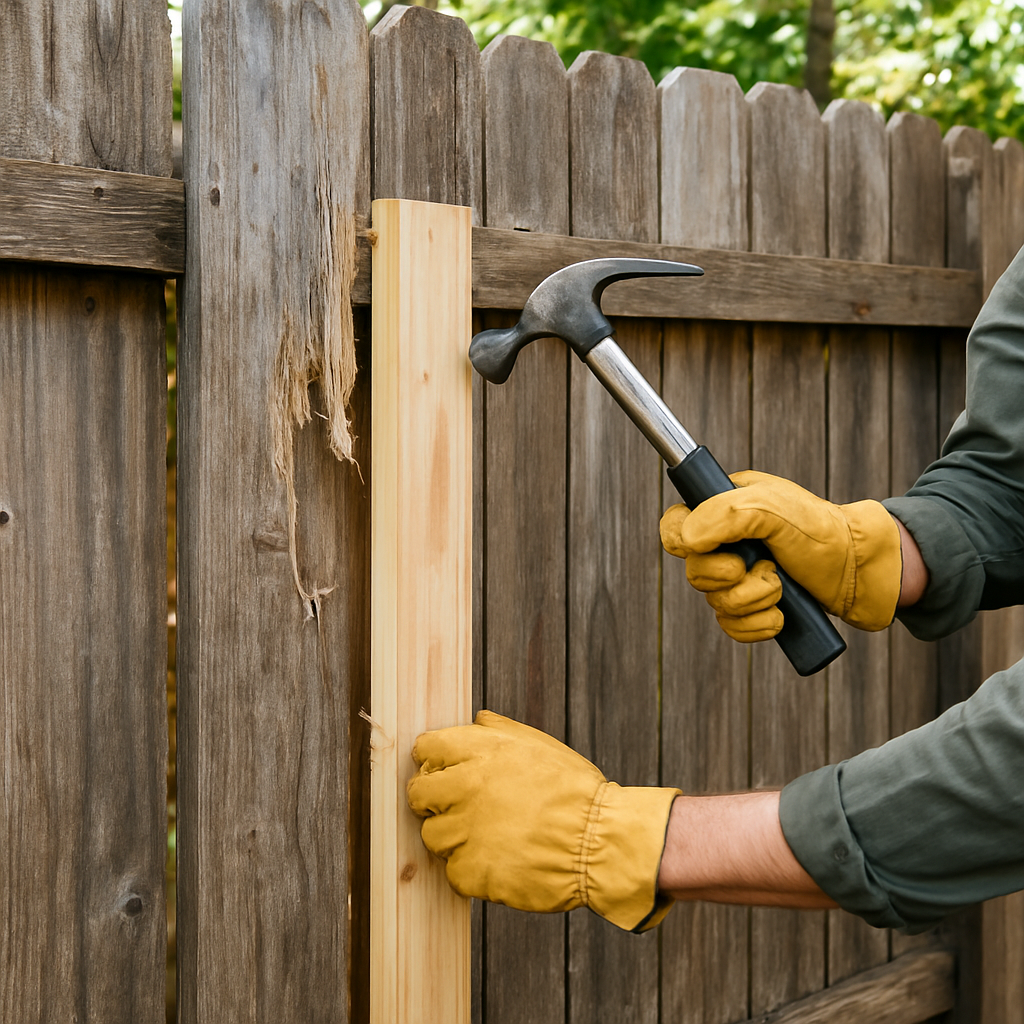
If you are searching for wood fence repair near me in the Tampa Bay area, this hands-on guide will help you quickly diagnose common problems, estimate realistic local costs, and decide what you can fix yourself versus when to call a pro. It walks through simple tests and step-by-step DIY fixes, sample price ranges for typical Tampa repairs, and clear criteria for hiring a local contractor such as Vilo Fence. Gather a few photos, measurements, and notes as you read so you can get an accurate estimate and a durable repair.
Quick diagnostic checklist to use before you search wood fence repair near me
Do this short triage first to separate a quick board swap from a structural job. The goal is threefold: document the problem so contractors can give realistic quotes, verify whether posts or rails are compromised, and identify access or permitting issues that raise cost or delay.
Photograph and record the right evidence
- Context shot: a photo of the entire run from 10 to 20 feet back so a contractor sees slope and neighboring structures
- Damage close-ups: two angles of each damaged panel or gate, plus a close shot of hardware and post bases with a tape measure or coin for scale
- Ground and drainage: photos showing soil level at the post, pooling water, or erosion
- Access notes: gate widths, fence height, driveway or yard obstacles, and whether heavy trucks can get to the site
Simple field tests you can do in five minutes – they matter. Push the post mid-height with both hands; if it moves more than about two inches under firm pressure, the footing is suspect. Tap boards and rails with a hammer – a hollow ring suggests internal rot. Probe the post base with a screwdriver; if the tool sinks deeper than a quarter inch the wood has lost structural strength. Take photos of each test result.
What to collect before you call a pro – this speeds accurate estimates. Measure approximate linear feet, count panels and gates, note wood type if known, estimate fence age, and record recent storm events or visible termite signs. Check permit rules in advance on the Hillsborough County building and permits page.
Practical tradeoff to keep in mind – replacing pickets is cheap but masking an unstable post is expensive in the long run. If your photos show multiple panels on the same footing or several adjacent posts fail the correct solution is a structural repair, not repeated cosmetic fixes. Expect higher labor and potential permit work for structural fixes.
Concrete example: A homeowner in South Tampa photographed two adjacent 6-foot panels leaning after a storm and ran the push test. One post moved 3 inches and a screwdriver probe sank 1/2 inch at the base. That evidence made the contractor skip a board-only quote and provide a post replacement line item, which avoided a repeat repair after the next heavy rain.
Next step when you are ready to search wood fence repair near me – attach the photos, measurements, and the test results to your inquiry. Use targeted search terms such as same day wood fence repair, cedar fence repair services near me, or wooden gate repairs near me to find contractors experienced with your material and timeline. For a fast local estimate you can start with Contact Vilo Fence and include your photos and linear footage in the message.
Common wood fence problems in Tampa and what causes them
Core point: Tampa exposes wood fences to a predictable set of failures: moisture-driven rot, insect attack, hardware corrosion, and storm or soil movement. When you search wood fence repair near me, contractors are diagnosing which of those primary failure modes is driving the visible damage because the right repair depends on the cause, not just the symptom.
What actually breaks and why
Rot at the base: Constant humidity, poor drainage, and soil contact strip wood of its structural fibers from the bottom up. Posts and the bottom rails are the usual victims; surface rot looks cosmetic at first but becomes a structural hazard once the grain separates under load.
Wood destroying insects: Termites and carpenter ants create hidden galleries that make boards sound solid until you probe them. If you see mud tubes, frass, or hollow-sounding rails, treat the pest risk before you invest in panel replacement. For a practical reference see termitemanagement target=_blank>UF IFAS termite guidance.
Leaning and loose posts: Soil erosion, saturated backfill after storms, and inadequate footings allow posts to move. The visible panel lean is a symptom; the real problem is often the footing or the surrounding grade. Repairing loose boards without addressing the footing is a short term fix.
Hardware and finish failure: Salt air and regular rain accelerate corrosion on nails, screws, hinges, and latches. Small hinges bind, screws shear, and finishes check – all of which increase water penetration and speed rot. Upgrading to stainless or hot-dipped galvanized hardware is a modest upfront cost that reduces call-backs.
Trade-off to weigh: Cedar and white oak age better visually and resist insects, but initial material cost is higher than pressure-treated pine. Pressure-treated posts in ground contact are the most cost-effective defensive move. If budget is tight, prioritize ground-contact posts and stainless fasteners over premium picket boards.
Concrete example: A homeowner near Tampa Palms had recurring hit-and-miss board replacements after seasonal storms. The real failure was that posts were set on compacted soil with plain nails; after replacing three posts with ground-contact lumber set in concrete and switching to stainless screws, the fence remained stable through the next hurricane season.
If damage clusters across adjacent panels or several posts test loose with the push test, classify the issue as structural – cosmetic fixes will not hold and will cost more over time.
Judgment call: For single-board decay or a stuck latch, a DIY or local wood fence repair service can be cost effective. For multiple rotten posts, insect infestation across panels, or recurring hardware corrosion, seek professional wood fence repair services that include proper footings, matching materials, and a warranty. If you are preparing to request a nearby wood fence repair quote, include photos of post bases and hardware corrosion in your inquiry to get an accurate scope.
DIY repairs you can do yourself with step-by-step guidance
Practical point: You can handle many fixes yourself if the damage is confined to boards, hardware, or a single post socket. The tradeoff is clear – DIY saves money up front but can waste time and invite repeat failures when the underlying footing or insect problem is missed. When you search wood fence repair near me, use the steps below to separate genuine DIY work from jobs that need a local wood fence repair professional.
Replacing a single picket or board – 45 to 90 minutes, difficulty: low
- Tools and materials: circular saw or handsaw, pry bar, tape, galvanized or stainless screws, replacement board of matching profile and thickness, exterior wood glue or construction adhesive.
- Remove fasteners around the damaged board. If the board is nailed, score along the rail to avoid splitting adjacent boards and pry out carefully.
- Trim the replacement board to length and test-fit. Coat contact areas with adhesive for extra holding power in high-humidity areas.
- Fasten with stainless screws to rails – two screws per rail for a 6-foot board. Stain or seal the new board within 48 hours.
- Check alignment from both sides and tighten as needed.
Tightening or replacing hardware – 30 to 60 minutes, difficulty: low
- Tools and materials: screwdriver or impact driver, penetrating oil, stainless or hot-dipped galvanized screws, replacement hinges or latch rated for exterior use.
- Remove rusted fasteners and clean hinge pockets. Apply penetrating oil to stuck bolts and let sit 10 minutes.
- Install upgraded fasteners sized to the hinge plate holes. If hinge holes are enlarged, use longer screws that bite into fresh wood or plug holes with wood filler before fastening.
- Test operation and add a small shim behind the hinge if the gate binds.
Repairing a sagging gate – 1 to 3 hours, difficulty: medium
- Tools and materials: circular saw, drill, 2×4 for diagonal brace, carriage bolts for through-bolting, adjustable hinges, wood shims.
- Remove gate pins and lift gate onto sawhorses. Measure the gap at top and bottom corners to determine twist.
- Cut a diagonal brace from top hinge corner to opposite bottom corner and through-bolt it to the frame with washers. Refit with upgraded hinges and test swing.
- If the post has moved, add shims between hinge and post or consider resetting the post if movement persists.
Sistering a rotten post – when acceptable, 2 to 6 hours, difficulty: medium
When to use this: sistering is reasonable when the original post is mostly intact above grade and rot is limited to the base. It is not a fix for posts with internal insect galleries or widespread splitting.
- Tools and materials: new ground-contact post, lag bolts, post hole digger, concrete mix or compactable gravel for drainage, pressure-treated lumber.
- Cut back decayed material to sound wood and attach the new post tight against the old one using long lag bolts through predrilled holes.
- Set the sistered pair in a new concrete collar or compacted gravel socket that improves drainage and prevents future undermining.
- Restore rails and boards to original alignment and check plumb.
Concrete example: A Seminole Heights homeowner tightened failing hinges and added a diagonal brace to a drooping gate. The gate carried heavy vines and had started scraping the threshold. After the repair the gate swung freely and did not require a full post reset, saving several hundred dollars and one day of labor.
Judgment you need: If rot or insect damage appears inside the post or spans multiple panels, stop. DIY bandages on a structurally compromised run only postpone a professional call and raise long-term cost. For targeted help from a local wood fence repair service that handles both small fixes and structural work, see Vilo Fence services.
Cost estimates for common wood fence repairs in the Tampa market
Straight to it: prices vary sharply depending on whether the work is cosmetic or structural. When you search wood fence repair near me, expect trivial fixes under a hundred dollars and structural work that routinely runs into the several-hundred to low-thousands range because of excavation, concrete, and labor.
What builds the price: material quality (cedar, treated pine, oak), footing work and concrete, labor for heavy digging or multiple crew members, hauling and disposal of old concrete, permit and inspection fees, and emergency or same day service surcharges after storms. Coastal properties and jobs with limited access add a premium for time and corrosion-resistant fasteners.
| Repair | Tampa contractor range | DIY rough cost | Typical time (crew) |
|---|---|---|---|
| Replace single picket/board (match profile) | $15 – $60 | $10 – $30 | 30 – 90 minutes |
| Reset or replace one in-ground post (concrete footing) | $200 – $600 | $75 – $250 | 2 – 6 hours |
| Replace one 6-foot panel (standard picket/stock panel) | $150 – $450 | $100 – $300 | 1 – 3 hours |
| Gate realignment + new hinges/latch | $120 – $450 | $50 – $200 | 1 – 4 hours |
| Sister a post and reset/repair adjacent rails | $250 – $700 | $150 – $400 | 3 – 6 hours |
| Multiple post replacement (3+ posts) with panel reinforcement | $800 – $2,500 | Usually not recommended DIY | 1 – 3 days |
Practical trade-off: cheap board swaps save money short-term but cost you time and repeat calls if the post or rail system is failing. Investing in a proper post reset or improved drainage up front usually prevents repeat repairs and is the cheaper option over a 3–5 year window in Tampa's climate.
Concrete example: after a summer storm in Gulfport a homeowner had two posts pulled from soft soil and four panels cracked. Three contractors quoted: a low bid that avoided new concrete, a mid bid that included 18-inch concrete collars and stainless screws, and a high bid that used cedar panels. The homeowner chose the mid bid, paid a bit more up front, and avoided two repeat calls the following season.
Get itemized bids that separate materials, labor, permit costs, and disposal. A cleaner comparison is almost always between line items, not the bottom-line number.
Judgment you should use: if damaged posts or panels exceed about 25–40 percent of a run, or the fence is older than 15 years with multiple failure modes (rot + insect damage + loose footings), replacement is often more cost-effective than piecemeal repairs.
Next step for accurate local pricing: attach clear photos of post bases and panel ends, measure linear feet and count posts, note access limits, and ask the contractor about corrosion-resistant fasteners and permit handling. For a local estimate and itemized quote, contact Vilo Fence and include your photos and linear footage.
Clear criteria for when to hire a professional like Vilo Fence
Direct rule: hire a pro when the visible damage points to hidden structural failure, safety/legal exposure, or when the repair required is beyond basic carpentry. A board swap or hinge replacement is small; anything that suggests the posts, footings, or multiple panels are compromised is not a hobby project.
Five decision axes to apply on-site
Scope of failure: single board or single hinge = DIY candidate; clustered failures across adjacent panels, multiple loose posts, or recurring failures after weather events = professional job. The pattern matters more than the raw count.
Structural risk: if posts wobble under firm two-hand pressure, if rail pockets are shredded, or if you can probe deeply into a post base, assume the fix needs excavation, new footings, or post replacement by a contractor with proper equipment.
Safety and liability: any fence that serves as a barrier for a pool, commercial property, or heavy traffic area requires compliant, documented repairs. Use professionals to ensure code, insurance, and inspection records are correct rather than improvising a patch.
Material and match complexity: matching historic profiles, specialty woods like cedar or oak, or custom millwork are reasons to hire a local expert who can source material, make accurate joins, and finish for Tampa conditions.
Time, access, and insurance coordination: if you need quick turnaround after storm damage, have tight access for equipment, or plan to file an insurance claim, a contractor who manages emergency response, permits, and claims will save money and time despite higher hourly rates.
Practical tradeoff: DIY saves on labor but has blind spots. The common mistake is repairing visible boards while ignoring compromised footings or insect galleries underneath. That saves money this week and guarantees a repeat call next season. Paying for proper footings, corrosion-resistant fasteners, and a professional assessment buys longevity in Tampa's humid, salt-air environment.
Concrete example: A property manager in South Tampa saw three consecutive 6-foot panels sag after a storm. He probed the post bases and found deep soft rot and mud tubes. Hiring a contractor allowed simultaneous termite treatment, post replacement with ground-contact timbers set in concrete collars, and an itemized invoice for insurance — all completed in two days versus a messy, piecemeal DIY job that would have taken multiple weekends.
If a problem suggests hidden rot, insect activity, safety compliance, or insurance involvement, the value of professional work typically exceeds the extra cost.
What to require from any pro you call: an on-site inspection, a written scope that separates materials and labor, footing and fastener specifications for Tampa conditions, permit handling if necessary, and a clear warranty. For a contractor that documents those items and offers Tampa-area experience, see Vilo Fence services and Contact Vilo Fence.
How to evaluate and choose a local fence contractor in Tampa
Start with the expectation that not all bids are comparable. When you search wood fence repair near me you will get a range of proposals that look similar on the surface but differ in footing detail, fastener quality, and warranty terms. The right contractor reduces future callbacks by addressing those hidden variables up front.
Three-step evaluation framework
Step 1 – Verify local capacity and credentials. Confirm local business registration, general liability and workers compensation insurance, and ask for recent project photos from Tampa or nearby neighborhoods. Local experience matters because crews need to understand salt-air corrosion, termite pressure, and Hillsborough County permit touchpoints.
Step 2 – Force clarity on the scope and materials. A professional wood fence repair quote should describe footing depth and method, post species or treatment, fastener type (stainless or hot-dipped galvanized), and how hidden rot will be discovered and handled. Tradeoff to consider: lower bids that omit concrete collars or use plain nails may look cheap now but double your cost in a storm-prone season.
Step 3 – Compare proposals on apples-to-apples metrics. Convert bids into cost per linear foot for the same deliverables and check warranty length and what it covers. Prefer itemized estimates that separate materials, labor, permit fees, and disposal. Do not accept vague language about permits or change orders – those are the usual ways low bids turn expensive.
Practical questions to ask on the call or site visit: What footing depth and concrete mix do you use, will posts be ground-contact rated, which brand of fasteners do you install, what is the warranty period and what does it exclude, and who handles permits? Also ask for a recent Tampa-area reference and photos of similar repairs.
Concrete example: A Hyde Park homeowner received three local bids after a storm. The low bid used compressed gravel for post sockets and plain screws. The selected mid-priced bid specified 18-inch concrete collars, ground-contact posts, and stainless screws, included permit handling, and provided a one-year workmanship warranty. That contractor completed work once and avoided a recurring repair bill the following season.
Judgment you should apply: Prioritize contractors who document how they prevent the failure you are seeing – footing details for loose posts, insect mitigation for apparent termite damage, or corrosion-resistant hardware for coastal sites. Paying a modest premium for clear scope and warranty usually saves money and hassle in Tampa.
Insist on an itemized, written estimate, proof of insurance, and a clear start and completion window before you sign anything.
If you want contractors who understand Tampa conditions and can provide itemized quotes and timelines, start with Vilo Fence services or send photos and measurements to Contact Vilo Fence for a focused estimate.
Permits, timeline, and post-repair maintenance for longevity
Start here: small cosmetic fixes rarely trigger municipal review, but any work that changes footing depth, fence location, or height often does. Treat permits as a project control item – skipping them can slow insurance payouts, cause rework if an inspector objects, and shift liability to the property owner.
Practical permit workflow for Tampa properties
Permitting steps: document the run with photos and measurements, ask your contractor whether the scope crosses a permit threshold, and if so have them file on your behalf. Use the Hillsborough County portal for specific requirements and timelines: Hillsborough County building and permits. Contractors familiar with local rules usually shorten the process and produce the paperwork inspectors expect.
Timing reality: expect an on-site estimate within a few days, scheduling for small repairs within the same week, and permit-dependent jobs to take longer while waiting for municipal sign-off. Concrete and foundation work introduce unavoidable pauses – contractors often allow time for concrete to reach usable strength before reattaching rails or gates.
Trade-off worth thinking about: fast emergency repairs get the gate closed and the yard secure, but rushed post installations without proper curing or drainage commonly fail sooner. Paying for correct footings and permit compliance up front usually reduces repeat calls and improves eligibility for insurance reimbursement.
Maintenance that actually extends service life: plan inspections at predictable intervals tied to seasons – after the wet season and after any significant storm event – and focus on three things: drainage around posts, integrity of fasteners, and signs of insect activity. Prioritize small preventive actions now rather than deferred major repairs later.
Concrete versus drained sockets – a pragmatic judgment: a concrete collar provides stability but can trap moisture against a poorly treated post. In Tampa the best practice is to use ground-contact rated posts, set them in a concrete collar with a gravel ring or sleeve for drainage, and seal the top of the concrete to shed water. That combination balances stability and decay prevention better than either approach alone.
Concrete example: after a storm a homeowner in Brandon replaced three posts. The first contractor started the work immediately without pulling permits and used plain nails; an inspector later required a permit and rejected some fasteners, delaying the insurance claim. The homeowner rehired a contractor who handled the permit, used ground-contact posts with stainless fasteners, and provided an itemized invoice the insurer accepted the first time.
If you expect to file an insurance claim or your repair affects property lines or safety barriers, confirm permit status before work begins – that preserves your coverage and avoids costly rework.
Next consideration: decide whether speed or long term durability matters more for your job. If you need help assembling photos and measurements that make a permit-ready quote, send them to Contact Vilo Fence so the estimate includes permit handling and realistic scheduling.
How to prepare for a Vilo Fence estimate and what to expect during service
Start with a useful packet, not a vague complaint. Contractors price on visible scope plus the unknowns they expect to find once they probe posts or remove boards. The single best way to reduce surprises is to give clear visual context, access details, and a short note about urgency up front; that turns a scattershot inquiry into a reliable, itemized estimate.
What to include with your initial inquiry
- A short video (30–90 seconds): walk parallel to the run showing the problem from 3–4 angles so the contractor sees slope, neighboring structures, and how panels meet posts.
- Three annotated photos: one long shot of the run, a close-up of the post base, and a close-up of affected hardware; label each photo with panel numbers or approximate distances.
- Measurements and counts: approximate linear feet, number of posts, number of gates, and fence height (6 ft, 4 ft, etc.).
- Access and constraints: gate width, driveway availability, pets, underground sprinkler heads, and whether heavy trucks can park nearby.
- Administrative notes: HOA rules, recent storm dates, and whether you expect to file an insurance claim.
Practical limitation to accept: a remote review produces a ballpark. Any job that touches footings, shows extensive rot, or has insect signs will normally need a brief on-site probe before a firm fixed-price quote. Expect the written estimate to include contingencies or an explicit follow-up step once excavation or probing begins.
What Vilo Fence does during an on-site assessment. The crew will confirm your supplied photos, perform a push-and-probe check of suspect posts, measure and mark panels, inspect hardware and gate geometry, and note access for equipment. They should leave you with a written, itemized estimate that separates materials, labor, permit fees (if any), disposal, and any proposed contingency work. If permits are required, Vilo Fence can include permit handling in the scope and timeline.
How service day typically proceeds and the homeowner role. For a routine repair expect a 2–4 person crew for most panel or post work, a small equipment footprint (post-hole auger, shop vac, hand tools), and an arrival window rather than an exact hour. Clear the work area, secure pets, and leave a dedicated parking spot if possible. The crew will stage materials, perform the structural work first (posts/footings), allow necessary curing or check points, restore rails and boards, haul debris, and perform a final walkthrough with you to confirm alignment and operation.
Trade-off to weigh: same day or emergency service reduces exposure and limits further damage, but it often commands a premium and can mean temporary fixes until a fuller structural repair can be scheduled. If longevity matters more than immediate appearance, accept a short delay for a full-scope, permit-compliant repair.
Concrete example: A Brandon homeowner sent a 60-second video showing a sagging gate and two adjacent panels leaning. Because the video showed post movement and a soft spot at the base, Vilo Fence scheduled an on-site probe the next morning, confirmed two rotten posts after a quick excavation, and issued an itemized quote that combined post replacement, stainless fasteners, and gate realignment. The clear media and access notes eliminated two return visits and prevented a mistaken board-only quote.
Attach a short video plus three labeled photos and linear footage to your initial message to get the fastest, most accurate wood fence repair near me estimate.
When you search for wood fence repair near me, include the packet above and state whether you need same day wood fence repair or can wait for a scheduled repair. That single piece of information changes how contractors price and prioritize your job.