
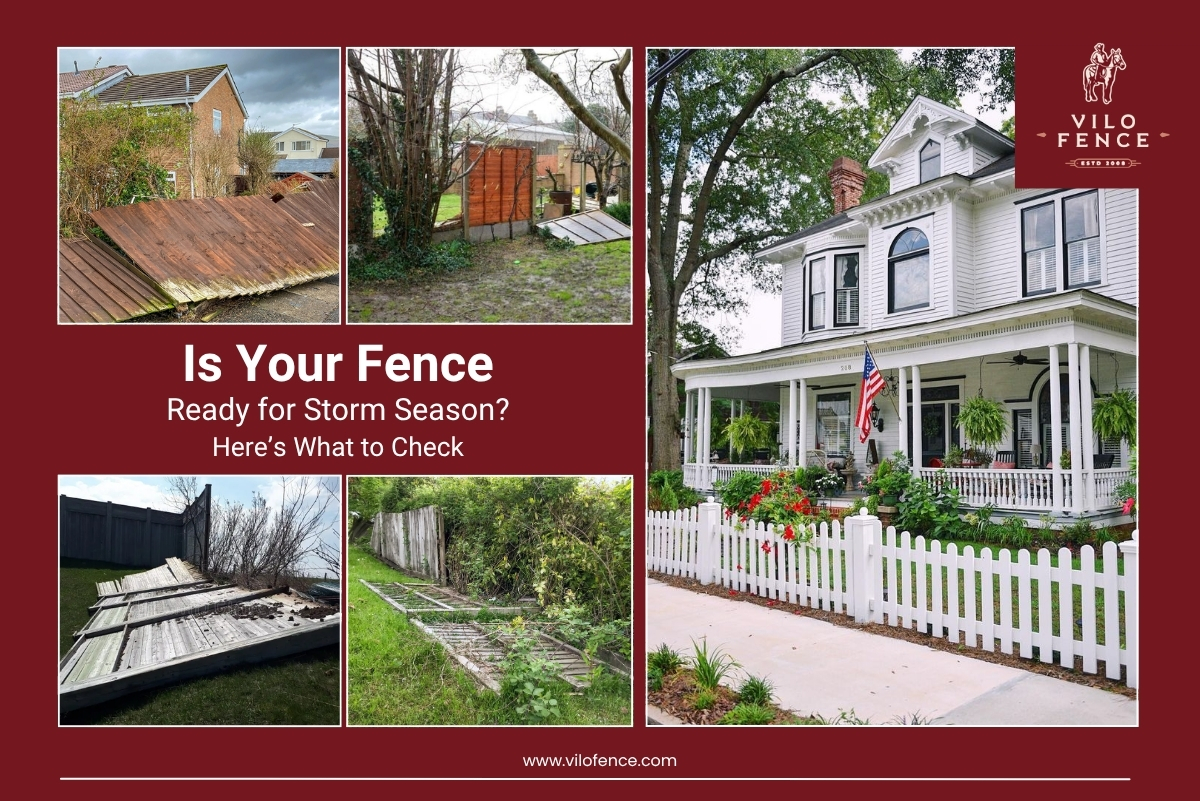
Storm season doesn’t just knock on your door—it hammers it. And when it does, your fence is one of the first lines of defence it tests. Wind, rain, flying debris, and waterlogging can quickly turn a decent-looking fence into scattered splinters if it’s not storm-ready.
Whether you have a wooden picket fence or a modern vinyl design, every fence needs a seasonal check-up. In this blog, we’ll walk you through a complete storm-season inspection list so your fence doesn’t just survive, it stands strong.
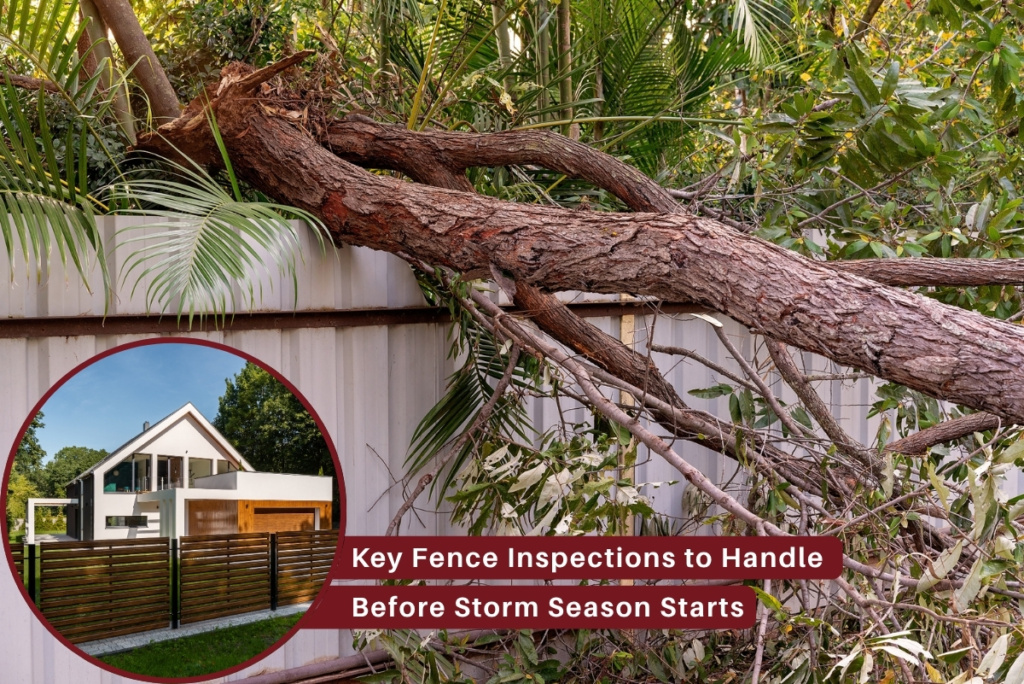
Key Fence Inspections to Handle Before Storm Season Starts
1. Start with your fence’s posts, which serve as its foundation.
The posts are what keep your fence standing. If they go, everything goes.
Take a walk along your fence line and physically test each post by giving it a gentle push. If you feel any wobble, leaning, or shifting—it’s time to act. Rot, soil erosion, or poorly mixed concrete bases are common culprits of post-instability.
What You Can Do:
- Reinforce with Concrete: If the post is still solid but a little loose, dig around the base and pour quick-set concrete.
- Replace Damaged Posts: If you notice signs of rotting wood or cracking metal, replacement is the safest bet.
- Add Steel Post Anchors: These improve stability and help prevent future movement from waterlogged soil.
2. Inspect Panels and Rails – Watch Out for Loose or Warped Sections
Panels and rails take the brunt of the wind. If they’re warped, split, or loose, they can tear away and take parts of the fence with them.
What to look for:
- Loose boards or pickets hanging by a nail
- Panels pulling away from posts
- Nails or screws backing out.
- Cracks or splinters in wood
Prevention Tips:
- Use corrosion-resistant fasteners—they’re more secure and last longer in wet weather.
- Tighten or replace old hardware.
- If your wood is warping often, consider switching to composite or vinyl for improved durability.
3. Check for Overhanging Trees or Debris Near the Fence
Tree branches are a hidden risk. A strong windstorm can send them crashing directly onto your fence.
Action Checklist:
- Trim back any branches hanging over or near your fence line.
- Remove dead or decaying limbs before storm season.
- Clear leaves, garden tools, or outdoor furniture resting near the fence. During a storm, they can fly into the air and cause damage.
This step keeps your yard safer in addition to protecting your fence.
4. Don’t Forget the Gates – Small, But Vulnerable
Gates are often overlooked, yet they’re usually the first part of a fence to get damaged. They swing, rattle, and take a lot of force during windy conditions.
Common Problems:
- Hinges rusting or breaking
- Latches coming loose
- Misalignment causes dragging or jamming.
Upgrade Ideas:
- Use self-closing hinges with tension adjusters.
- Install a wind-resistant latch to prevent flapping.
- Consider adding a drop rod for double gates to increase ground grip.
5. Verify the Fence’s Material: Not Every Fence Is Storm-Proof
Fence durability largely depends on the material. Knowing what you’re working with will help you take the right precautions.
Strongest Materials for Storm-Prone Areas:
- Vinyl: Flexible, rot-proof, and resists splitting.
- Aluminum or steel with protective coating: Great for wind resistance and corrosion control.
- Pressure-treated wood: Resists decay but still needs upkeep.
Materials That Need Extra Care:
- Standard untreated wood: Susceptible to rot and warping.
- Plastic panels: Often brittle and can crack under pressure.
Upgrade where necessary or enhance your current setup with protective treatments.
6. Look for Mold, Mildew, Rust, and Rot
Water and moisture from storms can slowly eat away at your fence. It may not fall immediately—but over time, damage builds.
What to Watch For:
- Black or green patches on wood (mold/mildew)
- Rust streaks near metal connections
- Soft, spongy wood at the base
What to Do:
- Apply wood preservatives or sealant before the rainy season.
- To get rid of mildew, mix bleach and water.
- Use rust-resistant paint or spray on metal parts.
7. Bracing: Reinforcement for High-Wind Areas
If you live in an area where winds routinely exceed 50–60 mph (like coastal regions or tornado zones), reinforcement is essential.
Types of Bracing:
- Diagonal bracing: Between fence posts and rails for added tension.
- Metal corner brackets: Give extra support at stress points.
- Deep post anchors: Keep posts grounded even in soft, soaked soil.
Bracing is especially useful for tall privacy fences, which act like wind sails.
8. Drainage Around the Fence
It’s not just the wind—rainwater pooling around fence posts can be equally damaging. Water buildup around the base weakens the soil and speeds up rot.
How to Improve Drainage:
- Regrade the soil to slope away from your fence line.
- Add gravel around the base of posts for better water flow.
- Install French drains or dry wells if drainage is consistently poor.
Your fence will thank you later.
9. Apply Protective Coatings – Paint, Sealant, or Stain
A well-coated fence is a protected fence. Moisture is your biggest enemy during storm season, so a fresh layer of defence helps immensely.
Options by Material:
- Wood: Use oil-based sealants or stains that repel water.
- Metal: Apply rust-inhibiting primer and outdoor-grade paint.
- Vinyl: Clean with a mild detergent to prevent dirt buildup (no sealing needed).
To significantly extend the life of your fence, make this an annual habit.
10. Create a Maintenance Schedule – Don’t Just Fix, Prevent
Most fence disasters are preventable. All it takes is one pre-storm inspection to catch issues early.
Maintenance Checklist (Quarterly):
- Look for indications of movement as you stroll along the fence line.
- Tighten any loose screws or fasteners.
- Trim vegetation and sweep away debris
- Check for leaning, sagging, or discoloured areas
- Apply touch-up paint or sealant
You’ll thank yourself (and your pocketbook) for setting reminders.
Conclusion: Trust Vilo Fence to Keep You Protected
Storms are unpredictable. Your fence shouldn’t be.
At Vilo Fence, we think that readiness is the first step towards protection. Whether it’s a quick repair or a full storm-resistant installation, our team is ready to help you build a fence that stands up to any season. Don’t wait for the next big wind to find out your fence wasn’t ready.
Let’s storm-proof your peace of mind. Contact Vilo Fence today.
FAQs
Q1. What time of year should I start checking my fence for storm readiness?
Ans. Start your inspection 4–6 weeks before your area’s storm season begins. This gives you time to plan repairs and upgrades if needed.
Q2. What’s the easiest DIY way to secure a fence post that’s wobbling?
Ans. Dig around the base, add gravel for drainage, and pour fast-setting concrete. Before testing, give it a full day to cure.
Q3. Can high winds blow down a well-installed fence?
Ans. Yes, especially if it’s tall or acts like a wind barrier. That’s why reinforcement and flexible materials like vinyl work better in storm-prone areas.
Q4. How do I know if a wooden fence is beyond repair?
Ans. If more than 25% of the wood is rotting or splitting, it’s usually more cost-effective to replace it rather than repair it.
Q5. What makes Vilo Fence different from other fencing companies?
Ans. We specialize in weather-resistant designs and offer tailored solutions for homeowners in high-risk areas. By using high-quality materials, expert craftsmanship, and dependable assistance, we create more than just fences—we create trust.